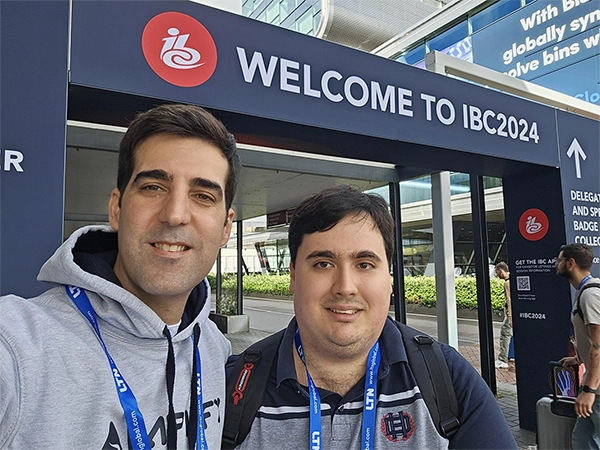
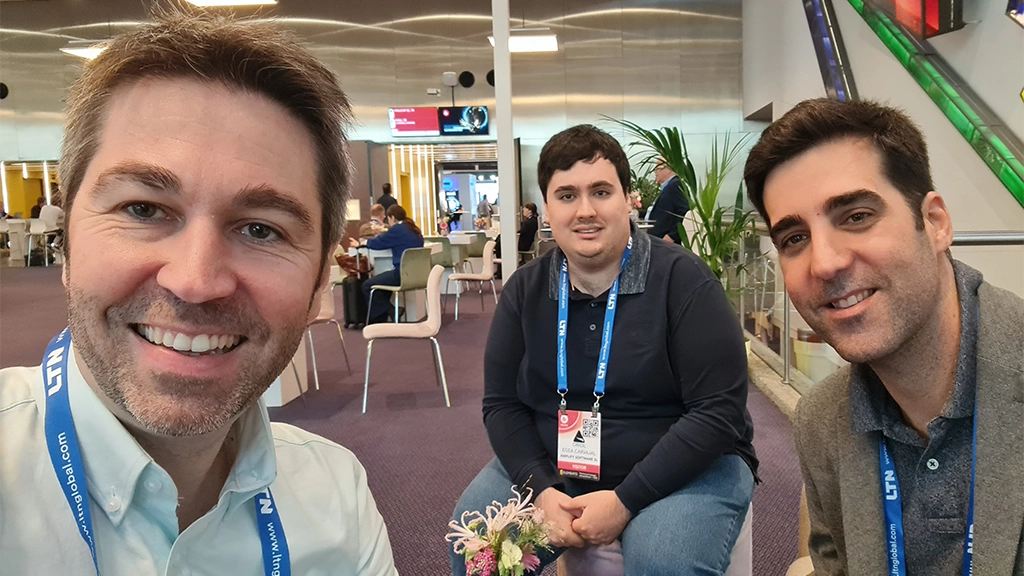
More than 80 meetings, demos and technical conversations later, one thing became clear at IBC 2026: AI media workflows are moving from experimentation into real production.
This year, the questions were no longer only about what AI can do. Instead, broadcasters, production companies and technology partners wanted to know something more practical:
How does AI fit into existing workflows? How can it scale? How should it be deployed? And what will it really cost? Those are exactly the conversations we wanted to have.
80+ conversations about real media workflows
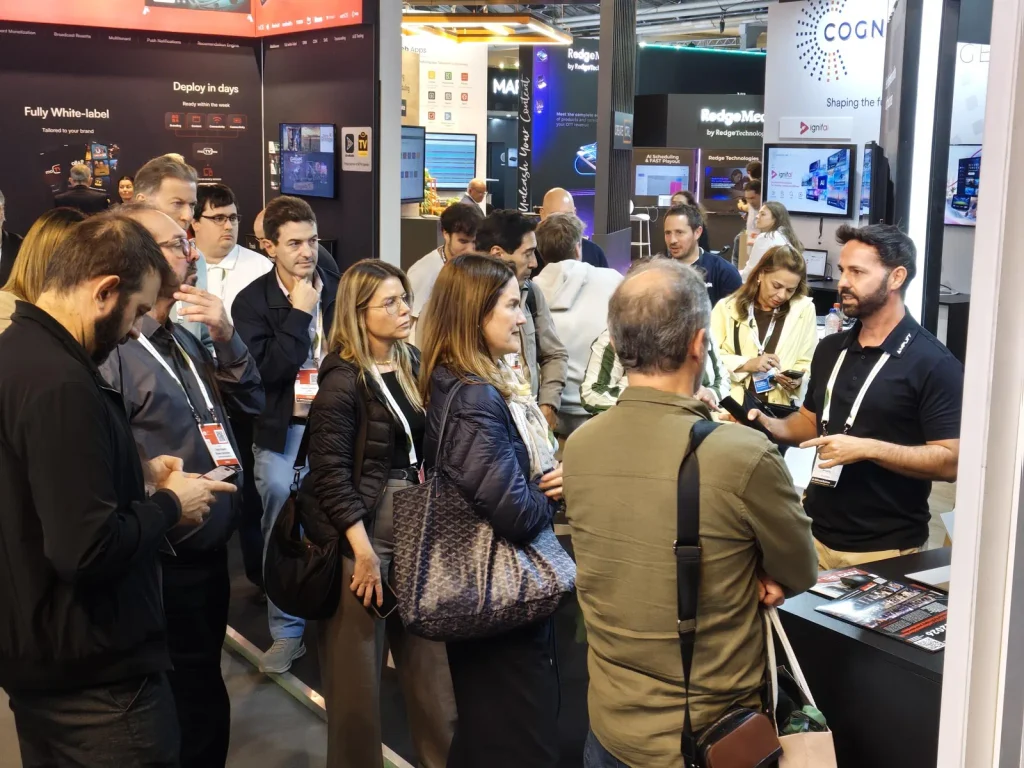
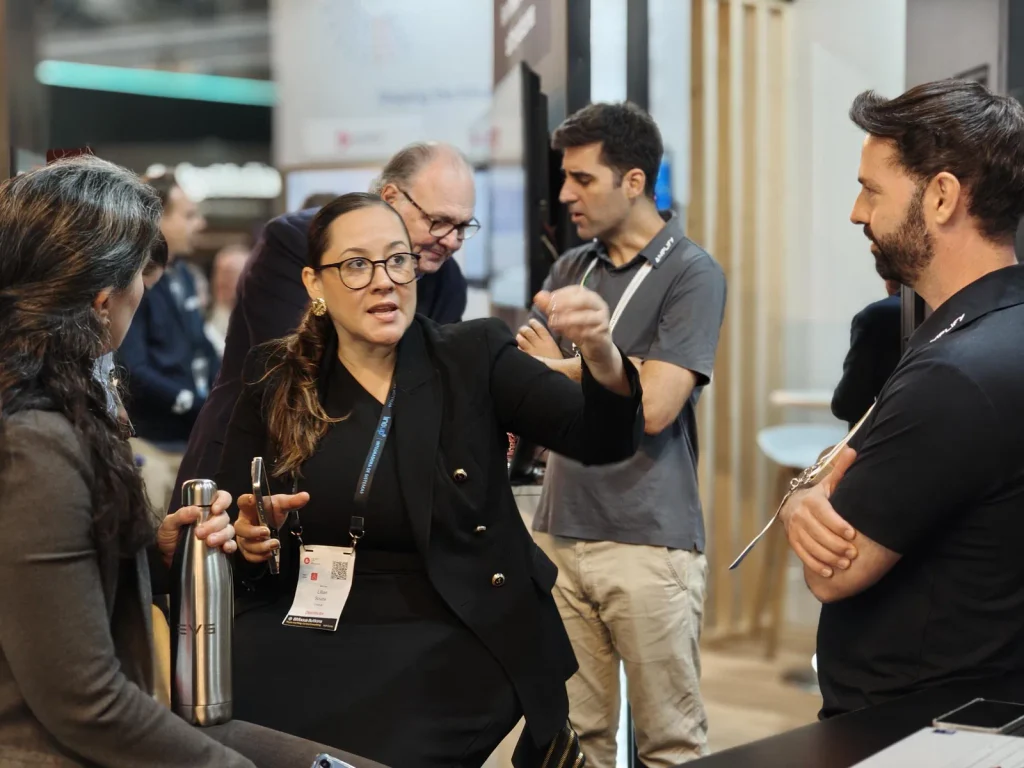
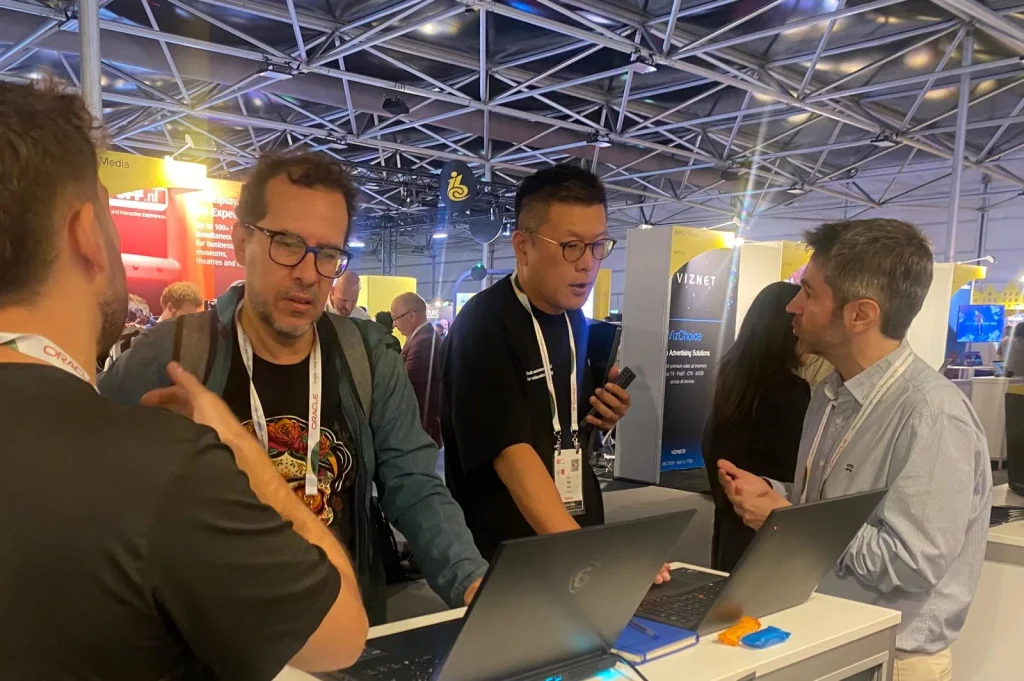
Over four intense days at IBC 2026, the Amplify team held more than 80 meetings, demos and technical workflow sessions.
We spoke with broadcasters, production companies, integrators, technology partners and media professionals from different markets. However, many of these sessions quickly moved beyond a standard product demo. Teams came to us with real challenges.
They showed us workflows where finding content still takes too long. They discussed growing media archives, repetitive editorial tasks, multilingual production and increasingly complex AI projects.
In other words, the conversation was not simply about adding AI. It was about making AI media workflows useful in real production environments. That difference matters.
At Amplify, our goal is not to add AI for the sake of it. Our goal is to make media workflows simpler, faster and easier to operate, while keeping editorial and creative teams in control.
“Wait, that’s new…”
One reaction came up several times during the show: “You didn’t have this the last time we saw you.” We will happily take that as a compliment. Visitors who already knew Amplify discovered new capabilities across content understanding, intelligent search, automation, generative storytelling and production workflows.
Our products continue to evolve quickly because the requirements of media teams are also evolving. But interestingly, some of the most valuable conversations at IBC were not about new features. They were about how customers can actually adopt the technology.
Clear AI pricing matters
AI technology can be difficult to price. Tokens, minutes, calls, models, credits, infrastructure and usage tiers can quickly make costs difficult to understand. For media companies, that creates uncertainty. We believe it should be different.
At Amplify, transparency, clarity and real cost visibility are part of the product experience.
Customers should understand what they are paying for. They should also know how costs may change as their usage grows.
That means offering flexible business models and avoiding unexpected charges or hidden costs.
For us, democratizing AI in Media & Entertainment is not only a technical challenge. It must also make sense economically and operationally. This message generated many interesting conversations at IBC 2026.
Flexible deployment for different media environments
The same principle applies to infrastructure. Every media organization has different technical requirements. Some prefer cloud deployments. Others need on-premises infrastructure. Some work in highly controlled environments, while others need systems that can scale rapidly across multiple teams and workflows.
Therefore, there should not be one deployment model for everyone. During IBC, many technical discussions focused on how to introduce AI without forcing companies to redesign their entire infrastructure. That is why flexible deployment is central to our approach.
Our technology can adapt to different operational environments, infrastructure strategies and scalability requirements. Because effective AI media workflows should adapt to the media company — not the other way around.
Scalability should be practical
Scalability was another recurring topic. A proof of concept with a few hours of content is one thing. A production environment processing thousands of hours of media is something very different.
Media companies need to know that AI can grow with their operation. That includes more content, more users, more workflows and more processing capacity. As a result, scalability needs to be considered from the beginning.
At Amplify, we design our products to support different infrastructure models and growth scenarios. This allows organizations to start with a specific use case and expand later when it makes sense. In practice, that can mean starting with one workflow and gradually adding new AI capabilities across the organization.
Two different IBC spaces, one shared vision
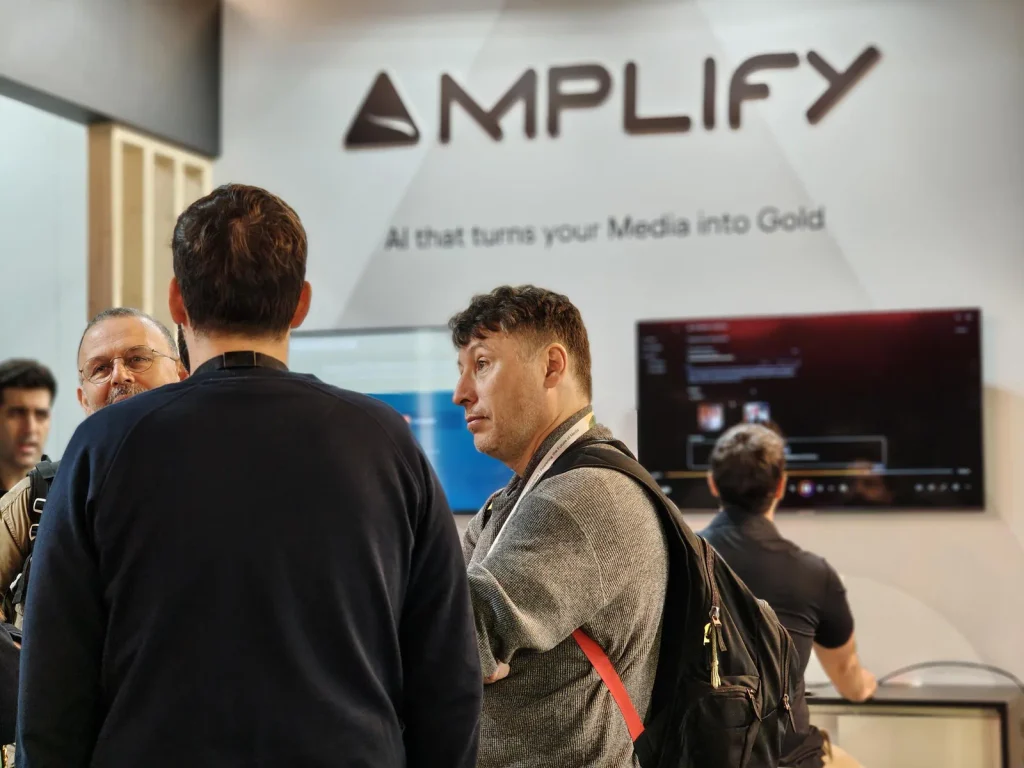
Our main presence at IBC 2026 was in Hall 1, Booth 1.C17, together with Aski-da. There, visitors explored Amplify’s technology across media understanding, automation and AI-assisted production workflows. Meanwhile, KAI at Booth 14.FT109 offered another perspective.
Developed together with Gestmusic and Fraunhofer IPK, KAI focuses on AI-assisted storytelling for entertainment production. The use cases are different. However, the philosophy is the same:
Technology should be the enabler, not the headline.
AI should help teams understand content, find relevant moments, automate repetitive work and move faster into the creative process. It should not replace the people making editorial decisions.
From AI demos to real production
One of the strongest signals from IBC 2026 was the maturity of the conversations. People are still interested in what AI can do. But they are increasingly interested in something more important:
How can we actually use it?
- That means integration.
- It means predictable costs.
- It means deployment flexibility.
- It means scalability.
And above all, it means solving real workflow problems.
This is where we believe the next stage of AI adoption in Media & Entertainment will happen.
Not through isolated demonstrations, but through AI media workflows that become part of everyday production.
What comes after IBC 2026?
We returned from Amsterdam with new contacts, new ideas and many conversations that will continue over the coming months. More importantly, we came back with valuable feedback.
We learned more about where media teams are losing time, where existing tools create friction and where AI can have the greatest practical impact. Those conversations directly influence what we build next.
IBC 2026 may be over, but the work that comes out of it is just getting started.
And next year, we promise to take more photos. 😄