

Amplify Your Innovation
Amplify provides AI assistants for media organizations,
broadcasters, and publishers to automate metadata
generation, storytelling, translation,
captioning, and content workflows.
We Develop Products that Understand Media
Discover how our Media Understanding Platform (MUP) drives the technology behind Amplify. From receiving media inputs to delivering structured insights, MUP enables smarter workflows and seamless integration with other systems. Whether you’re optimizing operations or enhancing content value, this is where innovation meets efficiency.
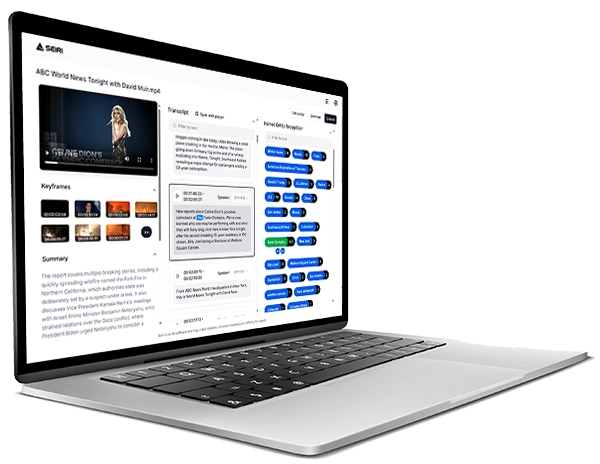
Seiri: AI for Metadata Extraction
From automatic transcription to facial recognition, logo detection, content classification and others, Seiri delivers an unparalleled level of automation and precision. This full version goes further, enabling media professionals to extract metadata, categorize content, generate summaries, or perform detailed scene recognition.
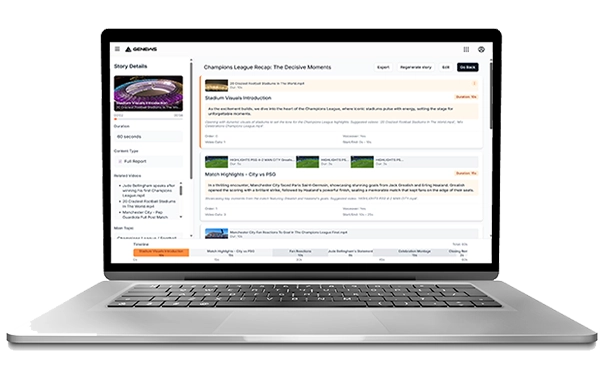
News: Generative AI Tool for Storytelling
From a single prompt, we use GenAI to script, narrate, and build news stories in seconds. The first generative tool for storytelling, it empowers journalists to scale content creation, accelerate production workflows, and completely reimagine how stories are shaped, crafted, and delivered across platforms keeping the human in the loop.
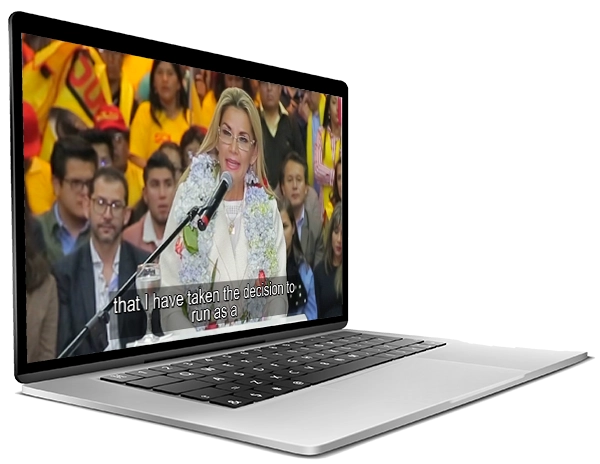
SeiriVoice Live: AI for Live Captioning
Designed specifically for transcribing, translating, and dubbing multimedia content. SeiriVoice is built to elevate the quality and efficiency of your content workflows in multiple languages. From real-time transcription to seamless dubbing and subtitle generation, SeiriVoice delivers high-accuracy results that reduce the need for manual intervention.
We Develop Technology You Can Talk To
We incorporate large language models (LLMs), enabling you to interact with your content through natural-language prompts—so you can truly talk to your media.
Our Rest API is a robust toolset for processing video and image content. From secure token generation to flexible endpoints and real-time testing, the portal is designed with developers in mind.
Frequently Asked Questions
Amplify is designed specifically for media organizations, broadcasters, production companies, and content owners. Unlike generic AI platforms, Amplify understands audiovisual content and media workflows, helping teams automate metadata generation, content discovery, storytelling, captioning, translation, and archive management.
Amplify uses advanced AI technologies to analyze audiovisual material and automatically extract information such as transcripts, speaker identification, named entities, scene descriptions, OCR text, object recognition, keywords, summaries, and content classifications. This makes media assets easier to search, reuse, and monetize.
Amplify transforms media libraries into searchable knowledge bases. Users can search using keywords, topics, people, locations, or natural language queries to quickly find relevant content across large archives.
Yes. Amplify supports multilingual workflows including transcription, translation, subtitling, dubbing, and live captioning. This helps media organizations expand audience reach and improve accessibility across multiple markets and languages.
Absolutely. Amplify products help editorial and production teams reduce manual tasks, automate research and content preparation, generate story structures, and streamline post-production workflows so teams can focus on creativity and storytelling.
By automatically enriching content with metadata and making archives easier to search and reuse, Amplify helps organizations unlock the value of historical media assets, accelerate content repurposing, and create new revenue opportunities.
Yes. Amplify is designed to support editorial teams, not replace them. Users can review, edit, validate, and enrich AI-generated outputs before publication or distribution, ensuring quality and editorial control.